Skip to content

Petroleum jelly helps prevent moisture loss by forming a protective barrier over the skin that slows down water evaporation. In short, one of the biggest petroleum jelly benefits is the surprisingly simple ability to help your skin hold onto its own moisture for longer.
A lot of skincare products focus on adding hydration to the skin. But if that moisture evaporates a short while later, your skin can still end up feeling dry, tight or uncomfortable. That’s when petroleum jelly steps into the limelight. Instead of flooding the skin with water, it helps to slow down the evaporation process instead.
This super simple concept is one of the reasons why dermatologists still recommend petrolatum-based products decades after they first became popular. They’re reliable, effective and backed by skin science.
What Does Petroleum Jelly Do for Your Skin?
For skin, petroleum jelly works by forming a protective layer over the surface of the epidermis that helps to reduce moisture loss. In short, it doesn’t technically add hydration itself: instead, it helps your skin hang on to the hydration it already has.
This distinction matters because skin naturally loses water throughout the day through a process called transepidermal water loss, or TEWL. In simple terms, that means water slowly evaporates from the surface of your skin over time. Cold weather, hot showers, harsh cleansers and dry indoor air can all make that process happen faster.
Petroleum jelly helps slow down this water loss by creating a seal over the skin’s surface. That’s why it’s often used on dry patches, chapped lips, cracked hands, cuts and areas that need extra protection from dryness.
How petroleum jelly works on the skin
If you’ve ever wondered what exactly Vaseline healing jelly is, the answer is simple: it’s a gel made from a blend of purified mineral oils and waxes.
Together, these ingredients create what dermatologists call an occlusive barrier. An occlusive is an ingredient that sits on the surface of the skin to help stop water from escaping too quickly. Think of it like putting a lid on a pot. The moisture is already there, but the barrier helps keep it from disappearing into the air.
This is also why petroleum jelly tends to work best when applied to slightly damp skin or layered over moisturizer. Instead of replacing hydration, it helps to seal it right in.
Why it’s trusted in dermatology
Vaseline® Healing Jelly Original is widely trusted because it is triple-purified; hypoallergenic, meaning it’s unlikely to cause irritation; and non-comedogenic, which means it does not typically clog pores. It was awarded the US National Eczema Association Seal of Acceptance as suitable for symptoms of sensitive skin and dryness associated with eczema.
Hydration vs Moisture Retention: What’s the Difference?
While “hydrated” and “moisturized” often get used interchangeably, they’re not exactly the same thing. Hydration refers to water content in the skin, whereas moisture retention is about helping that water stay there.
That’s why your skin can sometimes feel dry shortly after applying skincare products. Moisture may have been added temporarily, but nothing helped stop it from escaping.
Why adding moisture isn’t enough
Some skincare ingredients, called humectants, attract water to the skin. Glycerin and hyaluronic acid fall into this category, and work best when paired with ingredients that help keep that hydration from evaporating too quickly.
Without that second step, skin can end up feeling dry again not long after moisturizing, especially during winter, after workouts, or when your skin barrier is already stressed.
The role of occlusives in skincare
Occlusives play a very specific role in skincare. They help reduce water loss by forming a protective layer over the skin, or 'occlusive barrier'. This barrier helps reduce transepidermal water loss, or TEWL, which is the gradual evaporation of water from the skin into the surrounding air.
Here’s how the different moisturizer categories work together:
- Humectants attract water to the skin
- Emollients help soften and smooth the skin surface
- Occlusives help seal moisture in
Petroleum jelly is considered one of the most effective occlusive ingredients used in skincare.
How Petroleum Jelly Prevents Moisture Loss
One of the benefits of petroleum jelly is how effectively it helps support the skin barrier while slowing moisture evaporation from the surface of the skin. This can make a noticeable difference in how comfortable skin feels throughout the day.
Your skin naturally loses water all day long, but factors like harsh weather, indoor heating, over-exfoliation and frequent washing can speed the process up significantly. Petroleum jelly helps slow that down by creating a layer over the skin that keeps moisture where your skin needs it.
Importantly, petroleum jelly doesn’t add water into the skin itself. Its strength comes from helping your skin hang onto existing hydration more effectively.
How it locks water into the skin
Petroleum jelly works best when it’s layered over hydration. That’s why dermatologists often recommend applying it after moisturizer or onto slightly damp skin. It helps trap moisture against the surface instead of letting it evaporate into the air.
Petroleum jelly is also commonly used as the final step in a daily skincare routine because it helps seal in the moisture from the products underneath. This technique has become especially popular in overnight skincare routines, where the skin has several uninterrupted hours to stay protected from moisture loss.
Benefits of Petroleum Jelly for Skin
Many of the most important Vaseline® petroleum jelly benefits stem from its ability to form a reliable protective barrier over the skin. And while it’s often associated with dry skin, its uses go well beyond that.
Protects the skin barrier
Your skin’s barrier function is its frontline defence system. Think of it as an invisible shield made up of skin cells, lipids and natural moisturizing factors that work together to keep the good stuff in and the bad stuff out.
When your barrier is functioning well, it locks in hydration, protects against irritants, pollution, and bacteria, and helps your skin stay smooth and resilient. This is when skin feels comfortable, balanced and glowy.
When the barrier is compromised, however, things can unravel quickly. You might notice dryness, sensitivity, redness, breakouts, or a stinging sensation when applying products. Over-exfoliation, harsh active ingredients, stress and even environmental factors such as UV exposure can weaken this protective layer.
Petroleum jelly helps provide a buffer between the skin and the outside environment, which is why it’s commonly used on areas prone to dryness and friction.
Reduces dryness and irritation
Dry elbows, cracked hands, rough knees, post-gym dryness and chapped lips are all situations where moisture loss is noticeable. Petroleum jelly helps cushion those areas by reducing water loss and supporting the skin’s natural protective barrier.
- Did you know? The same moisture-retention principles apply to dry lips too, which is why Vaseline lip therapy is also a popular choice for preventing moisture loss overnight.
Supports smoother, softer skin
Skin that holds onto moisture more effectively tends to feel softer, smoother and more comfortable. That doesn’t mean petroleum jelly changes your skin overnight or completely transforms texture on its own. But by helping reduce dryness and preventing excessive water loss, it can help skin feel less tight, rough or flaky over time.
Is Petroleum Jelly Good for Your Face?
For many people, yes – especially when dryness or moisture loss is a concern. In fact, petroleum jelly is often used as the final step in nighttime skincare routines because it helps seal in hydration and support the skin barrier overnight.
That said, it’s important to understand what it does and doesn’t do. Petroleum jelly helps prevent moisture loss, but it does not directly hydrate the skin by itself.
When and how to use it on facial skin
Petroleum jelly is typically used after moisturizer rather than instead of moisturizer. A thin layer can be applied over dry areas or across the face as the final skincare step, particularly in colder weather or overnight. This technique is sometimes called slugging, where an occlusive layer is used to help reduce overnight moisture loss.
Common misconceptions debunked
Questions about whether Vaseline is bad for your skin usually stem from misunderstandings about how occlusive ingredients actually work.
One of the most common myths is that petroleum jelly automatically clogs pores. In reality, highly purified petroleum jelly is considered non-comedogenic, meaning it’s formulated not to clog pores.
Another misconception is that “greasy” automatically means unhealthy for skin. In truth, occlusives are designed to sit on the surface of the skin. That protective layer is part of how they help reduce water loss.
When to Use Petroleum Jelly in Your Routine
Petroleum jelly is incredibly versatile, which is partly why it’s stayed relevant for so long. People commonly use it:
- After a long hot shower, while skin is still slightly damp
- Before bed, especially during colder or drier months
- After shaving, when skin feels more sensitive or tight
- On dry hands after frequent washing or sanitizing
- On chapped lips overnight to help prevent moisture loss
- During winter weather, when cold air and indoor heating can dry skin out faster
- On friction-prone areas like heels, elbows or inner thighs
- After workouts or gym showers, when skin can sometimes feel stripped or dehydrated
Best times to apply
One of the best times to apply petroleum jelly is shortly after bathing or cleansing, while skin is still slightly damp. That helps trap existing moisture against the skin instead of letting it evaporate.
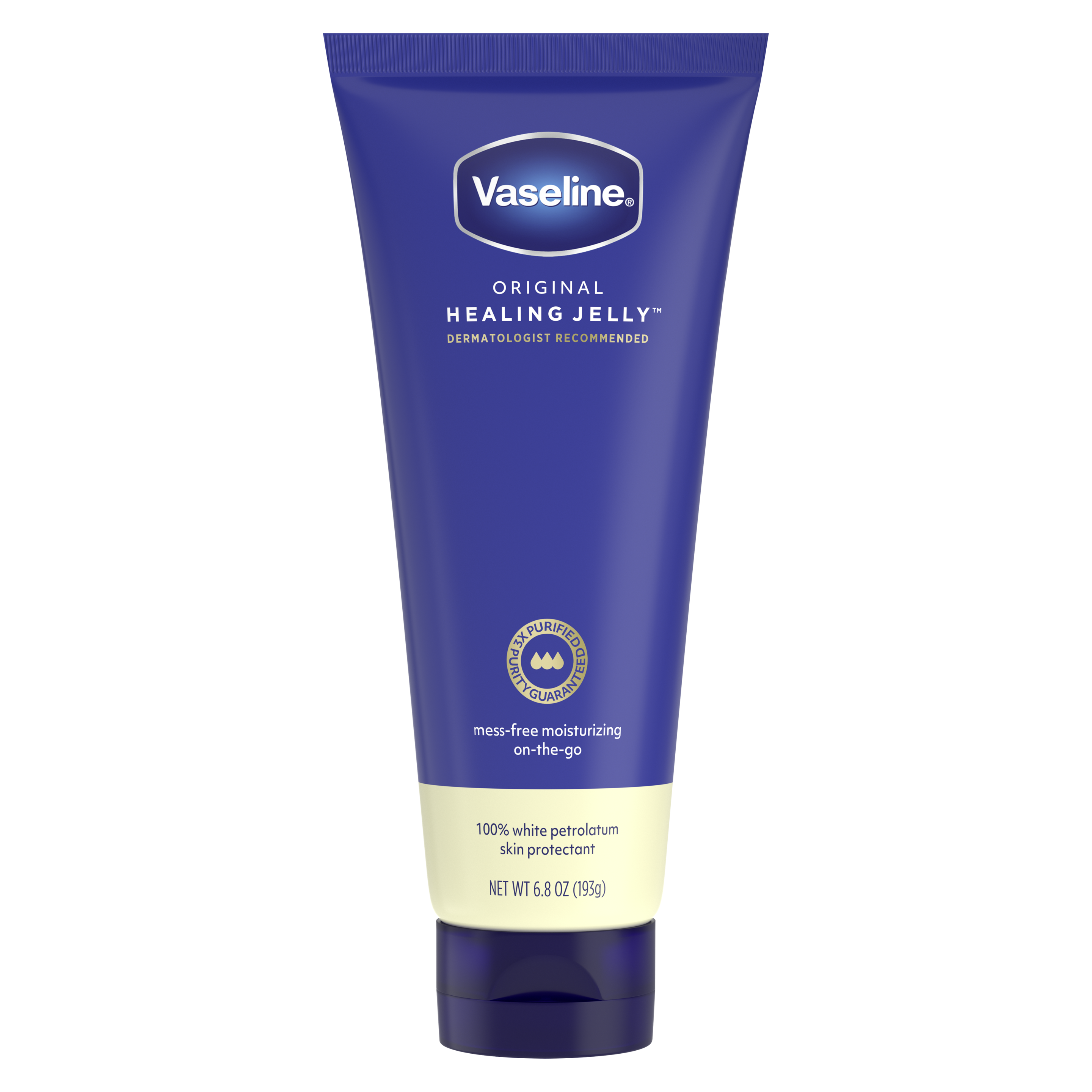
Overnight use is also popular because skin has several uninterrupted hours to stay protected from moisture loss. Products like Vaseline® Original Healing Jelly™ Tube also make it easier to reapply throughout the day when dryness shows up unexpectedly.
Protect your skin and lock in moisture with simple, effective care using Vaseline petroleum jelly.
FAQs
Can you use petroleum jelly on your face every day?
Many people use petroleum jelly on their face daily, especially overnight or during dry weather. It’s typically used as the final step in a skincare routine to help reduce moisture loss and support the skin barrier.
Is petrolatum the same as petroleum jelly?
Yes. Petrolatum is the ingredient name commonly used in skincare formulations, while petroleum jelly is the more familiar everyday term for the same occlusive ingredient.
Does petroleum jelly clog pores?
Highly purified petroleum jelly is considered non-comedogenic, which means it is generally formulated not to clog pores. However, skincare routines should always be adjusted based on your skin type and preferences.
Can petroleum jelly help repair a damaged skin barrier?
Petroleum jelly can help support a damaged skin barrier by reducing moisture loss and helping skin stay protected while it recovers. The skin barrier is the outer layer of skin responsible for keeping moisture in and irritants out.
Should you apply petroleum jelly before or after moisturizer?
If you’ve wondered how Vaseline® helps your skin in a routine, it mainly works by helping seal in the moisture from the products applied underneath. That’s why petroleum jelly is usually applied after moisturizer, not before.
This content is provided for general informational purposes and should not be considered medical advice. If you have concerns about your skin, consult a qualified healthcare professional.
Sources
1. Kim S, Ly BK, Ha JH, Carson KA, Hawkins S, Kang S, Chien AL
A consistent skin care regimen leads to objective and subjective improvements in dry human skin: Investigator-blinded randomized clinical trial. Bloomberg School of Public Health School of Medicine.