Skip to content

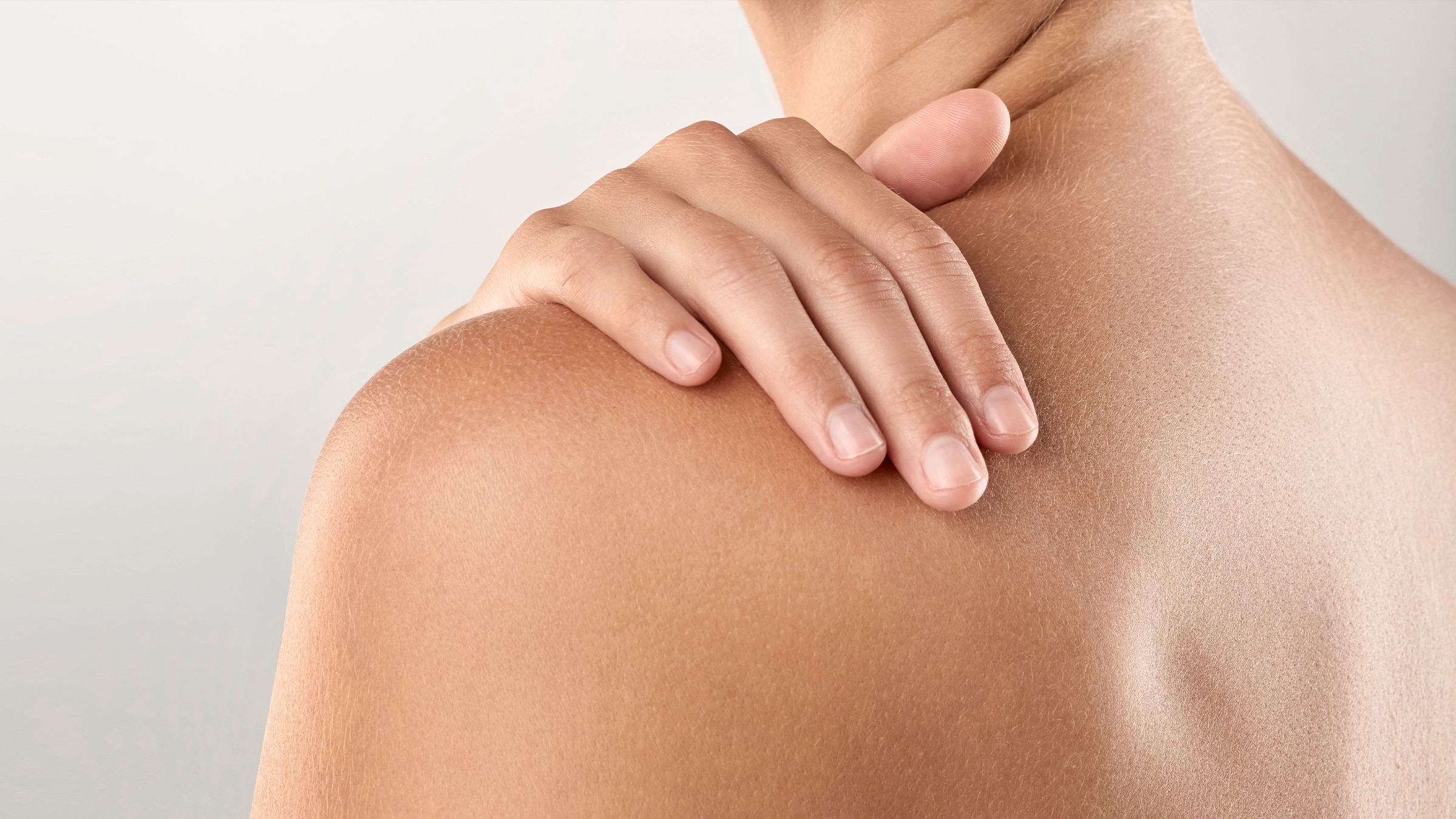
Skin barrier repair starts with understanding one simple truth: when your skin feels dry, tight, or irritated, it’s often asking for support, not more products.
The good news is that helping your skin recover doesn’t have to be complicated. With the right approach, you can give your body what it needs to feel comfortable and resilient.
Skin Barrier Repair: What It Is and Why It Matters
What is the skin barrier?
Think of your skin barrier as your body’s built-in protective shield. It’s the outermost layer of your skin, made up of cells held together by lipids, working like a brick-and-mortar wall. Its job is simple but essential: to keep moisture in and environmental stressors out.
According to dermatological research, this outer layer, known as the stratum corneum, plays a critical role in maintaining hydration and protecting the body from external irritants.1
When this barrier is healthy, your skin feels smooth, balanced, and strong. When it’s damaged, discomfort can set in.
Signs your skin barrier is damaged
A compromised skin barrier doesn’t always show up dramatically. Often, it’s the small signals that tell the story:
- Dry, flaky patches
- Tightness after cleansing
- Increased sensitivity
- Redness or irritation
- Skin that just doesn’t feel like itself
These are your skin’s way of saying it needs a little extra care and protection.
What causes skin barrier damage?
Everyday life plays a bigger role than you might think. From weather changes to your skincare routine, several factors can disrupt your barrier:
- Cold air, heat, and low humidity
- Over-cleansing or harsh ingredients
- Over-exfoliation
- Pollution and environmental stress
Even something as common as chronically dry skin can point to an ongoing barrier imbalance.
Why Dermatologists Recommend Healing Gels
How occlusives protect and repair skin
When it comes to a healing gel for dry skin, dermatologists often point to one key category: occlusives.
Occlusives don’t add moisture in the same way lotions do. Instead, they sit on top of the skin, creating a protective layer that helps prevent water loss. This gives your skin the space it needs to recover more effectively.
That’s why ingredients like petroleum jelly have been trusted for generations. They help support your skin’s natural healing process by keeping moisture exactly where it’s needed.
Understand transepidermal water loss (TEWL)
Transepidermal water loss, or TEWL, is the process where water escapes from your skin into the environment.2 It happens naturally, but when your barrier is compromised, it can happen faster than your skin can keep up with.
This is where occlusives make a real difference. By forming a seal over the skin, they help reduce water loss and maintain hydration levels, which is essential for recovery.
If you’re curious about how this works on a deeper level, it ties closely to how moisture heals dry skin.
Why simple formulas can be more effective
Sometimes less really is more. Simple, well-understood ingredients can often outperform complex formulas, especially when your skin is stressed. Products that focus on protecting and supporting the barrier, rather than overwhelming it, tend to be more effective in the long run.
Petrolatum Benefits for Skin Barrier Repair
How petroleum jelly locks in moisture
When we talk about petroleum jelly for skin, we’re talking about one of the most effective occlusives available.
Petroleum jelly, also called healing jelly, forms a breathable barrier over the skin that locks in moisture and helps prevent dryness. This protective layer supports the skin’s natural recovery process, allowing it to rebuild and strengthen over time.
Is petroleum jelly good for skin? The science explained.
A common question is: is petroleum jelly good for skin?
The answer comes down to how it works. Petroleum jelly is highly refined and designed to sit on the skin’s surface, where it helps reduce moisture loss. It’s also non-comedogenic, meaning it doesn’t clog pores when used appropriately.
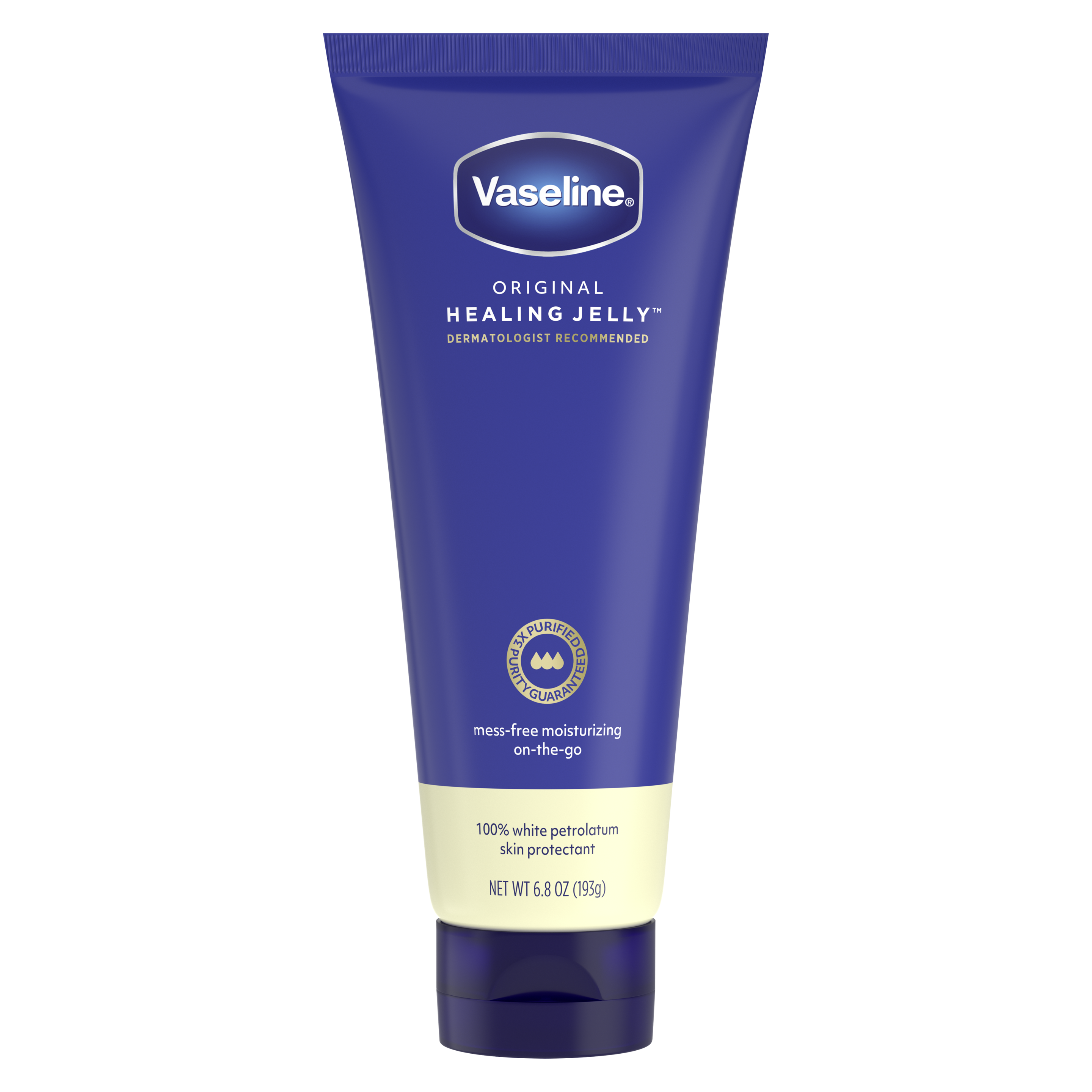
That’s why products like Vaseline® Original Healing Jelly are often recommended by skincare professionals as a reliable, gentle option for supporting dry or compromised skin.
Myths vs facts about petrolatum
There are a few misconceptions worth clearing up:
- Myth: It suffocates the skin
- Fact: It creates a protective barrier that still allows skin to function naturally
- Myth: It causes breakouts
- Fact: It’s non-comedogenic when used correctly
- Myth: It’s outdated
- Fact: It remains one of the most effective occlusive ingredients available
How to Use Healing Gel for Dry Skin
When to apply for maximum effectiveness
Timing matters. Healing gels work best when applied to slightly damp skin, ideally after cleansing or bathing. This helps trap existing moisture before it evaporates.
How much to use it without clogging skin
A thin layer is usually enough. You don’t need to overapply to get the benefits. Focus on areas that feel dry, irritated, or exposed to the elements.
Layering healing gels with your skincare routine
For best results, think in layers:
- Cleanse gently
- Apply hydrating products (like serums or lotions)
- Seal everything in with an occlusive
This is the same principle behind practices like slugging, where an occlusive is used as the final step to lock in hydration overnight.
Everyday Causes of Skin Barrier Damage (And How to Fix Them)
Over-exfoliation and active ingredients
Using too many actives or exfoliating too often can weaken your skin barrier. Scaling back and focusing on hydration can help restore balance.
Weather, pollution, and environmental stress
From cold winds to indoor heating, environmental factors constantly challenge your skin. Protecting it with a barrier-supporting routine can make a noticeable difference.
Dry patches, irritation, and sensitivity
When your skin feels uncomfortable, it’s often a sign that your barrier needs support. Gentle care and moisture retention can help bring it back to a healthier state.
Simple Skin Barrier Repair Routine
Cleanse gently without stripping skin
Use mild cleansers that don’t remove your skin’s natural oils. This helps maintain the integrity of your barrier.
Hydrate and seal with an occlusive layer
Start with a hydrating product, then follow with an occlusive like Vaseline® Original Healing Jelly to lock in moisture and protect your skin.
Protect and maintain healthy skin daily
Consistency is key. A daily skincare regimen can help keep your skin comfortable, supported, and balanced over time.
Healing vs Hydrating: What Your Skin Actually Needs
When to focus on repair over treatment
If your skin feels irritated or sensitive, it’s often better to focus on repair rather than adding more active treatments. Giving your skin time to recover can lead to better long-term results.
How to know if your barrier is healing
As your barrier improves, you’ll likely notice:
- Less dryness and flaking
- Reduced sensitivity
- Skin that feels smoother and more comfortable
Healthy skin isn’t about doing more. It’s about giving it the right support. Care for your skin with Vaseline®.
FAQs
Can you use petroleum jelly on your face every day?
Petroleum jelly can be used daily, especially on dry areas, as long as it’s applied to clean skin. It helps lock in moisture and support the skin barrier without clogging pores when used appropriately.
How long does it take to repair the skin barrier?
Skin barrier recovery can take anywhere from a few days to several weeks, depending on the level of damage and consistency of care. Supporting the skin with hydration and protection helps speed up the process.
Do healing gels clog pores?
Most healing gels made with purified petrolatum are non-comedogenic, meaning they don’t clog pores. However, applying them to dirty skin can trap impurities, so proper cleansing is important.
Sources
1. Kubo A, Ishizaki I, Kawasaki H, Nagao K, Ohashi Y, Amagai M. The stratum corneum comprises three layers with distinct metal-ion barrier properties. 2013.
2. Green M, Kashetsky N, Feschuk A, Maibach HI. Transepidermal water loss (TEWL): Environment and pollution—A systematic review. Skin Health and Disease. 2022.